SUBDURAL HEMORRHAGE
|
This
rarely occurs in the fetus; most are related to trauma during the perinatal period
(1-11). In the fetus they have been reported as a result of:
·
Trauma (motor vehicle accidents). Abdominal massage has been reported in some women from the
Pacific Islands (2).
·
Maternal warfarin ingestion.
·
Maternal pancreatitis.
·
Coagulation factor deficiency.
·
Fetal thrombocytopenia.
·
Premature closure of foramen ovale complicated by cardiac
and hepatic failure due to DIC-type hemostasis disorders (without
thrombocytopenia) (3).
·
Severe pre-eclampsia (7).
·
Cerebral malformation (8).
· Idiopathic.
ULTRASOUND |
Initially
very echogenic but may gradually become echolucent with echogenic areas (4). At
this stage it may be difficult to distinguish from a subarachnoid cyst or
hygroma. Monitoring fetuses at risk for hemorrhage with doppler studies has
been suggested to detect indicators of a worsening prognosis (9).
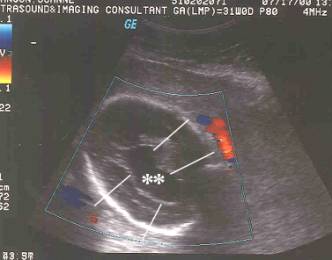
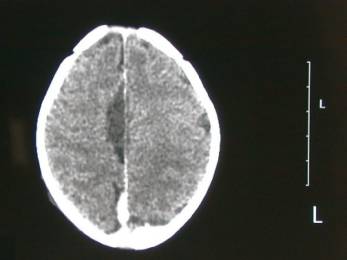
Post-traumatic inter-hemispheric subdural hematoma. There is an avascular
collection of fluid situated centrally between the falx (**). Note the anhydramnios that is
present due to co-existent rupture of membranes. The post delivery CT scan
demonstrates the interhemispheric collection of blood, with an area of acute
hemorrhage posteriorly (arrow)
PROGNOSIS |
Prognosis is generally poor when compared to
prenatal intraventricular hemorrhage. 50% die in utero with the surviving 50%
demonstrating post-natal neurological sequelae.
There is no standard antenatal management. Treatment
of the underlying disorder is vital. Vaginal delivery does not appear to be
contra-indicated if there are no other obstetric contra-indication.
REFERENCES |