|
KLIPPEL-FEIL SYNDROME |
Klippel-Feil syndrome consists of synostosis of two or more vertebral segments. Although this occurs most commonly in the cervical region, any part of the vertebral column may be involved. This is classified as a segmentation anomaly.
Classical clinical triad:
- Short neck.
- Restriction of cervical neck movement.
- Low posterior hairline.
Other features include deafness (30%) and a webbed neck.
CLASSIFICATION
|
RADIOGRAPHIC FEATURES
|
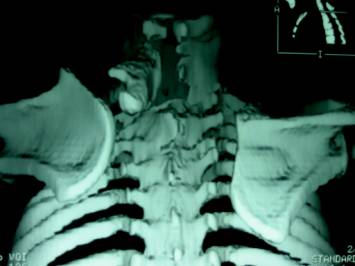
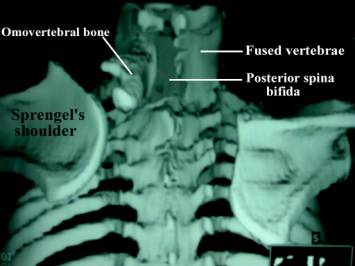
- Fusion of vertebral bodies and posterior elements of the cervical spine.
- Hemivertebrae may be present.
- Vertebral fusion (cervical, cervicothoracic or atlanto occipital).
- Torticollis.
- Scoliosis.
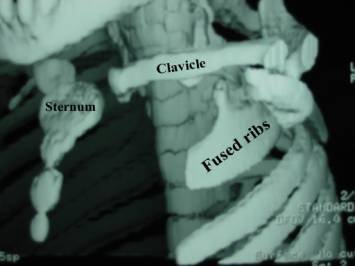
- Rib fusion.
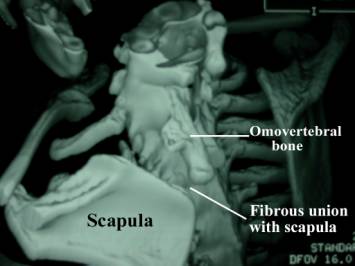
- Sprengel deformity (25-40%).
- Ear anomalies (absent auditory canal, microtia, deformed ossicles).
ASSOCIATED ANOMALIES
|
- Platybasia, syringomyelia, encephalocele.
- Syndactyly, clubbed foot, hypoplastic lumbar vertebrae.
- Renal anomalies (50%) - agenesis, dysgenesis, malrotation duplication, ectopia.
- Congenital heart disease (5%) - ASD, aortic coarctation.
SYNDROMES ASSOCIATED WITH KLIPPEL-FEIL ANOMALY
|
- Sprengel shoulder.
- Wildervanck Syndrome - Congenital perceptual deafness, Klippel-Feil anomaly, abducens nerve palsy, retraction of the bulb of one or both eyes (Duane syndrome).