|
TYPES OF ANOMALOUS
DRAINAGE PATHWAYS IN TOTAL ANOMALOUS
PULMONARY VENOUS DRAINAGE |
TYPE I - SUPRACARDIAC |
The four pulmonary veins (two from each lung) form a confluence posterior to the left atrium.
- An anomalous vertical vein originates from the left aspect of the confluence and ascends cephalad, anterior to the left main bronchus and left pulmonary vein to join the left brachiocephalic vein (which enters the SVC).
- Connection between an anomalous trunk arising from the right side of the pulmonary venous confluence and right SVC.
- Obstruction is rare but may occur when the left vertical vein is compressed between the left pulmonary artery and left main stem bronchus or when there is a restrictive connection to the SVC.
- Complex cardiac malformations are common with anomalous connection to the right SVC.
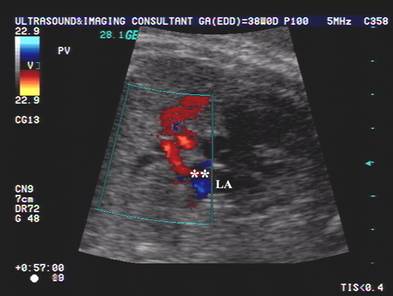
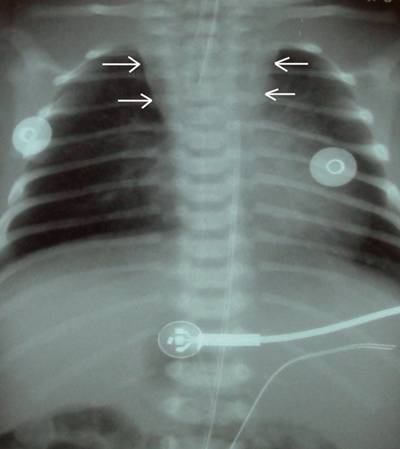
Large Right Atrium |
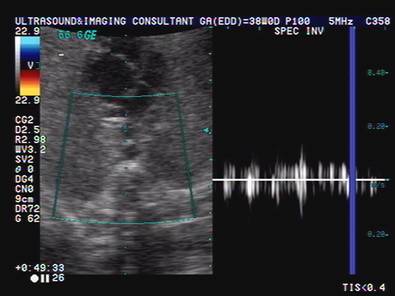
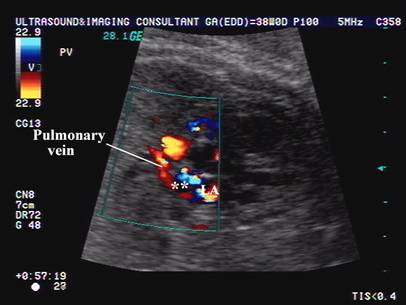
Pulmonary veins drain into common chamber between left atrium and descending aorta |
|
|
|
|
|
|
|
|
|
|
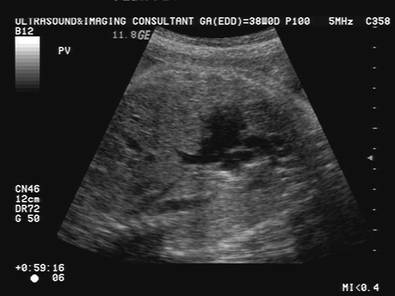
Parasagittal view demonstrating the common chamber |
|
|
|
|
|
|
|
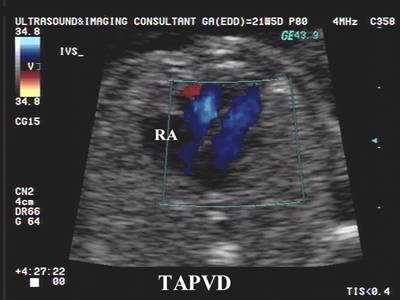
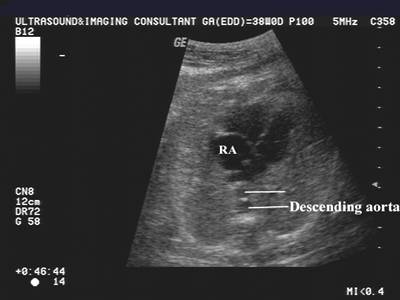
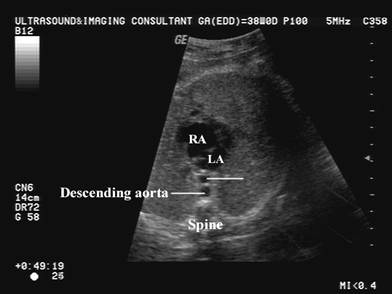
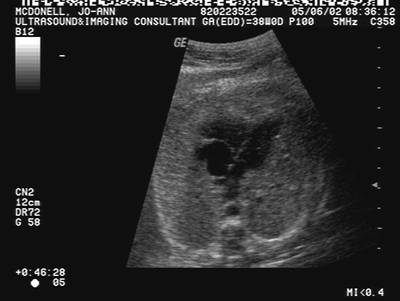
TYPE II - CARDIAC |
- Anomalous vein drains into coronary sinus (most frequently).
- Anomalous vein drains into the posterior right atrium directly (less frequent).
- Anomalous vein drains into the posterior right atrium via a short common trunk.
- Obstruction occurs in 22% of patients with TAPVR to the coronary sinus directly.
TYPE III - INFRACARDIAC |
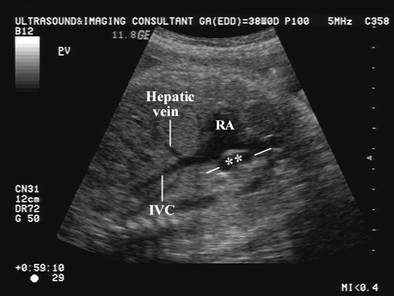
Four veins join to form a confluence posterior to the left atrium. An anomalous descending vein extends from the confluence downward just anterior to the esophagus, and extends with the esophagus through its hiatus in the diaphragm.
- Anomalous vein drains into the portal venous system (80%).
- Anomalous vein drains into one of the hepatic veins, ductus venosus or IVC (rarely).
- Almost always associated with some degree of obstruction to venous return (can occur at any level including the esophageal hiatus or at the anomalous connection).
TYPE IV – MIXED ANOMALOUS CONNECTIONS |
There are a large variety of pulmonary venous drainage patterns.
- Left pulmonary veins drains into the left braciocephalic veins via an anomalous vertical vein.
- Right pulmonary veins drain into the coronary sinus or directly into the right atrium.
- Obstruction can occur at one or more levels.